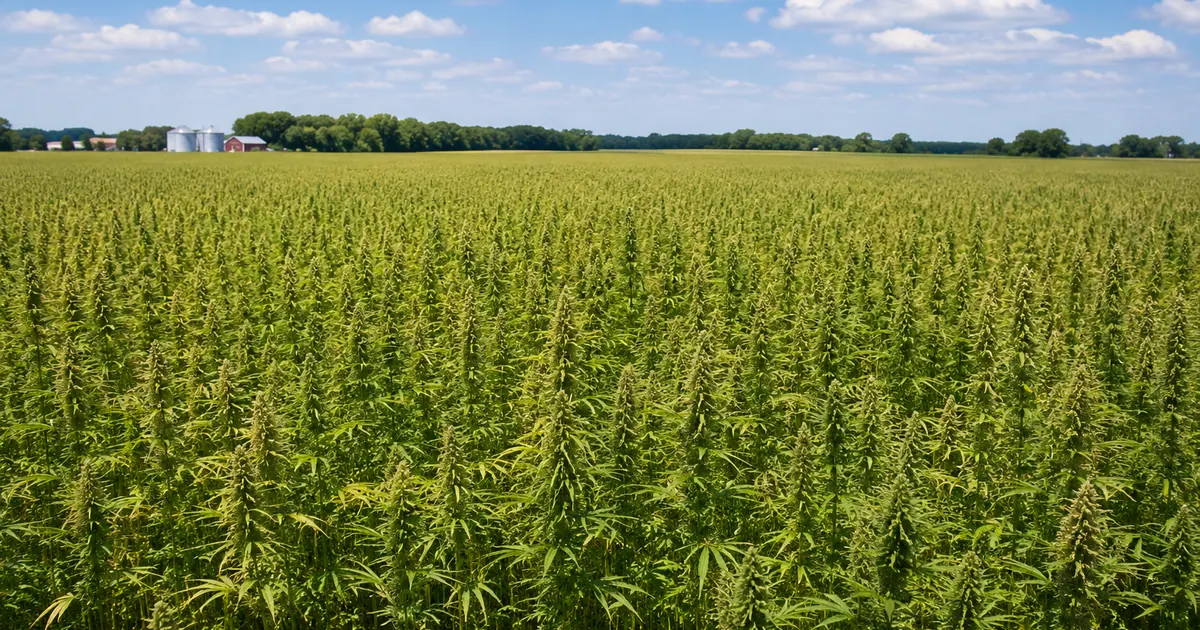
Hemp Grain From Seed to Shelf: How Hemp Is Changing the American Food Industry
From Field to Fork: Hemp's Quiet Food Revolution
Walk down the natural foods aisle at any major grocery store today — Whole Foods, Kroger, Walmart — and you're likely to find a bag of hemp hearts or hemp seed granola staring back at you. This isn't a new health fad. It's the result of decades of advocacy, landmark federal legislation, and a growing consumer appetite for plant-based nutrition.
Hemp grain has arrived in the American food supply. And it's here to stay.
What Are Hemp Seeds and Hemp Hearts?
Hemp seeds are the shelled seeds of the Cannabis sativa plant. They are not psychoactive, contain no meaningful THC content, and have been used as a food source in cultures around the world for thousands of years.
Hemp hearts are simply hemp seeds with the outer shell removed — the soft, pale inner kernel. They're mild, slightly nutty in flavor, and easy to sprinkle on just about anything: yogurt, oatmeal, salads, smoothies, or avocado toast.
Both forms are commercially available throughout the United States and are explicitly permitted under the 2018 Farm Bill (Agricultural Improvement Act of 2018), which redefined hemp as an agricultural commodity distinct from marijuana and removed it from the federal Controlled Substances Act schedule. Hemp grain and hemp seed intended for food use are not subject to DEA scheduling and are regulated as conventional food items by the U.S. Food and Drug Administration (FDA).
Hemp Grain's Nutrition Profile
Hemp seeds are often called a superfood — and while that term gets overused, the nutritional case for hemp grain is genuinely compelling.
Complete Protein
Hemp seeds are one of the few plant foods that provide all nine essential amino acids, making them a complete protein source. A three-tablespoon (30g) serving of hemp hearts delivers approximately 10 grams of protein — comparable to a serving of ground beef, without the saturated fat. (Source: USDA FoodData Central, Hemp Seeds, hulled, FDC ID 170148.) (Always consult a qualified healthcare provider for personalized nutrition guidance.)
Essential Fatty Acids
Hemp grain is rich in omega-3 and omega-6 fatty acids, including gamma-linolenic acid (GLA). Nutritional research indicates that hemp seed oil provides omega-6 to omega-3 fatty acids in an approximately 3:1 ratio, a proportion frequently cited in peer-reviewed food science literature as favorable for plant-based diets. (See: Callaway, J.C. (2004). "Hempseed as a nutritional resource: An overview." Euphytica, 140(1–2), 65–72. https://doi.org/10.1007/s10681-004-4811-6.) (Always consult a qualified healthcare provider for personalized nutrition guidance.)
Minerals and Fiber
Hemp seeds are a notable source of magnesium, phosphorus, potassium, iron, and zinc. The whole seed (with shell intact) is also a meaningful source of dietary fiber.
Note: These statements reflect the general nutritional composition of hemp grain as documented in peer-reviewed food science literature. They are not intended to diagnose, treat, cure, or prevent any disease.
Hemp Hearts in American Grocery Retail
Hemp hearts are no longer a specialty-store secret. As of 2026, you can find hemp food products at:
- Natural grocers (Whole Foods Market, Sprouts, Natural Grocers)
- Mass retail (Walmart, Target, Costco)
- Regional chains and independent co-ops nationwide
The market for hemp food products — including hemp protein powder, hemp milk, hemp oil, and shelled hemp seed — has grown substantially since the 2018 Farm Bill clarified their federal status. Industry analysts have tracked consistent year-over-year growth in the hemp food segment even as the broader CBD market has faced regulatory headwinds from the FDA. (For market sizing and growth trend data, see the Hemp Industry Daily Hemp & CBD Almanac, published annually by New Frontier Data/Hemp Industry Daily; figures cited reflect the most recently available edition at time of writing.)
A Spotlight on Small Producers: The Hemperor Brand
Not all hemp food comes from large commodity operations. Independent producers are bringing craft-quality hemp hearts to market with a focus on quality sourcing and community connection.
One example is Blain Bectold's Hemperor brand of hemp hearts, available at Downonthefarm.com. Hemperor represents the kind of farm-to-consumer model that advocates in the hemp food space have championed — transparent sourcing, quality-focused production, and a direct relationship between grower and buyer. If you're looking to support independent hemp agriculture while stocking your pantry, Hemperor hemp hearts are worth exploring.
Hemp Grain and the 2018 Farm Bill: The Legal Landscape
It's worth being precise about the legal framework, especially for readers navigating hemp retail or farming decisions.
Under the 2018 Farm Bill (Pub. L. 115-334), hemp is defined as Cannabis sativa L. with a delta-9 THC concentration of no more than 0.3% on a dry weight basis — this is a federal threshold. States may establish their own hemp programs within that federal framework, and some states maintain additional regulations on hemp commerce. As of May 2026, we encourage all growers, retailers, and consumers to verify current state law with their state department of agriculture before making business or purchasing decisions, as regulations continue to evolve.
Hemp seed and hemp grain intended for human food use fall under FDA oversight as conventional food ingredients. The FDA has not restricted the sale of hemp seeds or hemp hearts in food products, as of May 2026. (For current FDA guidance on hemp seed food ingredients, see the FDA's webpage on hemp and hemp seed and the agency's GRAS Notice inventory. Regulatory status is subject to change; verify current FDA guidance before making business decisions.)
Bringing Hemp to Your Table
The story of hemp grain in America is still being written. What began as a niche ingredient in natural food circles is now a mainstream pantry staple, backed by solid nutritional science and a clear federal legal framework.
Whether you're a longtime hemp advocate, a curious home cook, or a retailer looking to understand this category better, the message is straightforward: hemp seeds and hemp hearts are real food, federally recognized, and widely available.
Learn more about hemp advocacy, state-level policy, and the full scope of hemp's potential by exploring the iHemp network — and consider supporting independent hemp producers like the Hemperor brand at Downonthefarm.com who are building the future of American hemp agriculture one harvest at a time.
Want to stay current on hemp legislation in your state? Connect with your state hemp association and visit USDA's Agricultural Marketing Service hemp page for official program updates.